
AI for law firms is quickly becoming less about innovation and more about survival. Most small law firms lose potential clients long before a consultation ever happens.
Calls go to voicemail. Website messages sit unanswered. Manual intake slows everything down while your team focuses on active cases.
Here’s where it gets costly. People looking for legal help rarely contact just one firm. They reach out to several and move forward with whoever responds first.
According to a recent study, companies that respond to a new lead within the first hour are up to 7x times more likely to qualify that lead than those that respond later. For AI for small law firms, this reality creates a clear gap. The value is not in legal research. It is in answering inquiries, capturing details, and responding on time.
AI focused on communication, intake, and follow-ups helps law firms respond instantly, capture client details, and stay in touch automatically. When speed decides who gets hired, responding first is everything.
Capture more leads and book more appointments with 24/7 AI
TL;DR
- AI for law firms helps practices streamline client management and communication so no lead is missed.
- The biggest gains come from AI that handles calls, messages, scheduling, and follow-ups in one connected flow.
- Broadly gives law firms AI employees that manage these interactions automatically in one app.
What Is AI for Law Firms?
AI for law firms is best understood as a client-facing operational layer. It helps law firms manage conversations, intake, scheduling, and follow-ups more efficiently, without changing how legal work itself is done.
There are two very different uses of AI in the legal space.
Legal AI software is built for research, document review, and case analysis. These tools support attorneys behind the scenes and are often designed for complex legal workflows.
Practical AI for law firms focuses on what happens before and between cases. An AI legal assistant answers calls and messages, captures client details, schedules consultations, and sends follow-ups automatically.
For many firms, this is where the biggest gains come from because it removes friction from client management and communication.
How Law Firms Are Using AI Today
Law firms are increasingly using AI to manage client conversations, intake, and follow-ups in one connected workflow. Instead of treating communication as a series of disconnected tasks, AI helps keep everything organized and responsive.
Client Intake Automation Without Extra Staff
Client intake is one of the most time-consuming and error-prone parts of running a law firm. Calls come in while staff are busy. Messages arrive after hours. Forms get reviewed late.
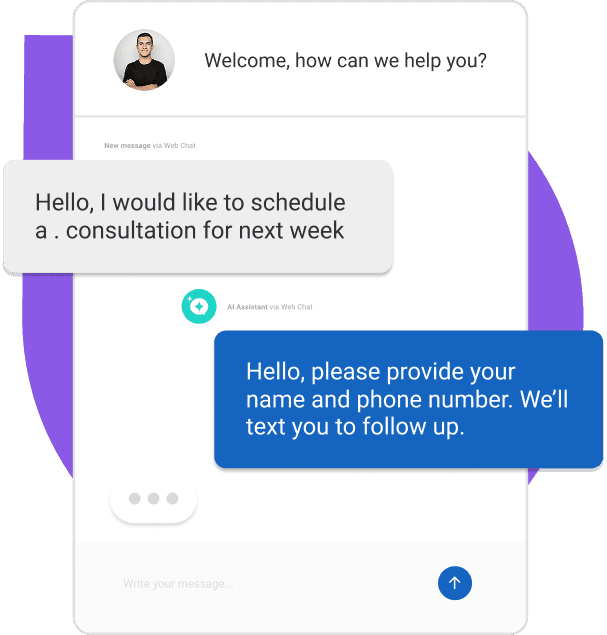
AI addresses this by acting as a virtual front desk for law firms.
- AI answers phone calls, texts, and website chats in real time
- Client details are captured instantly, including contact information and reason for inquiry
- Intake continues even when the office is closed
This approach to client intake automation improves law firm lead capture without increasing headcount. Recent research shows that many law firms miss a significant share of incoming calls during business hours, with even higher miss rates after hours, which directly impacts new client acquisition.
This type of AI-driven conversation flow is similar to how local AI chatbots handle real customer interactions across channels, rather than relying on basic scripted responses.
Faster Scheduling and Fewer Missed Consultations
Once a potential client reaches out, scheduling becomes the next critical step. Delays or back-and-forth messages often lead to lost momentum.
AI improves this by:
- Booking consultations based on real availability
- Sending automated confirmations and reminders
- Reducing no-shows and missed appointments
This strengthens legal client communication and creates a smoother experience for both the firm and the client. According to recent data, automated appointment reminders can reduce no-show rates by up to 38 percent across service-based industries, including professional services.
For appointment scheduling for lawyers, AI removes friction and keeps consultations moving forward.
Follow-Ups That Keep Leads From Going Cold
Not every potential client is ready to book right away. Some compare options. Others forget to respond.
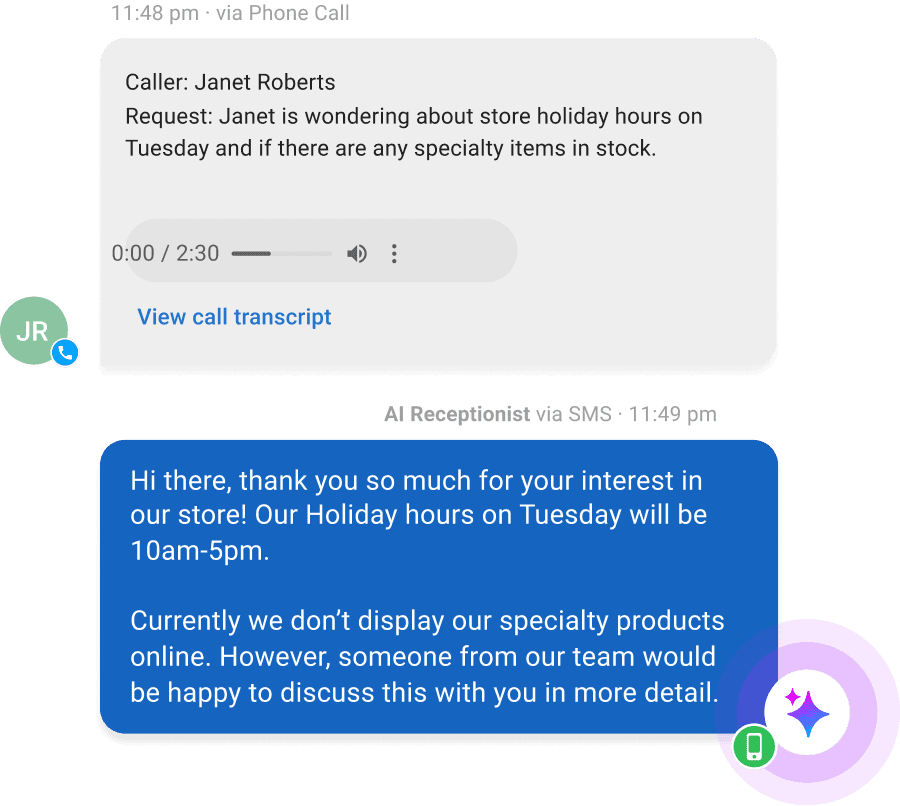
AI helps law firms stay present without manual effort.
- Follow-up messages are sent automatically
- Undecided prospects stay engaged
- Communication continues during evenings and weekends
This kind of lead follow-up automation matters because multiple touchpoints are often required before a decision is made. AI also solves the challenge of after-hours call answering, ensuring inquiries are acknowledged and captured even when the office is closed.
The same follow-up principles are used in marketing automation for small businesses, where timely, consistent communication leads to higher conversion and better long-term engagement.
Why Speed Is the Competitive Advantage for Law Firms
Speed plays a direct role in whether a law firm wins or loses a potential client.
Most people looking for legal help contact more than one firm. They call, submit a form, or send a message, then wait to see who responds first. A fast reply signals professionalism and reliability. A slow one creates doubt.
This is where AI changes the equation. Instead of relying on staff availability, AI allows firms to manage communication at scale.
- Calls, texts, and chats receive instant responses
- Prospects hear back even outside office hours
- Follow-ups happen consistently without reminders
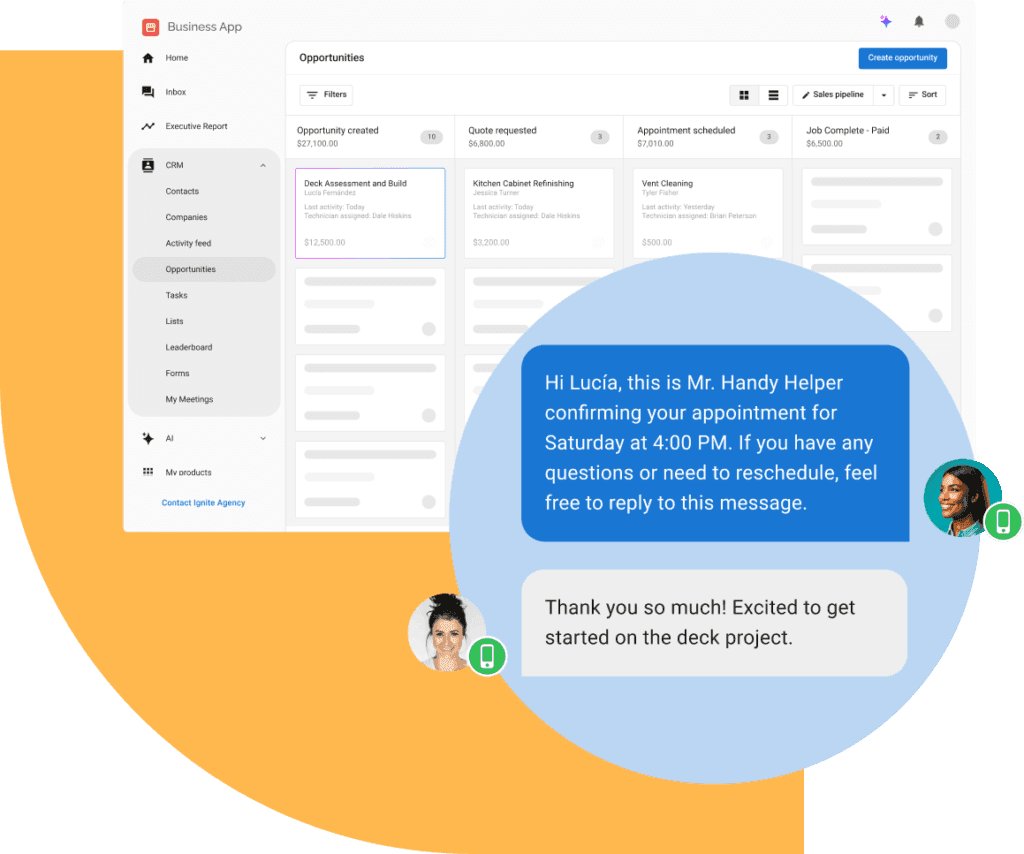
This improves the overall client experience for law firms while solving the challenge of after-hours call answering. AI makes speed reliable, not dependent on who is free at the moment.
Best AI Tools for Law Firms Focused on Client Management and Communication
Not all AI tools for law firms solve the same problems. Some support legal research. Others focus on practice management. The tools below are compared based on how well they help firms manage client communication, intake, and follow-through.
Tool Best for Limitations Broadly Managing client communication, intake, scheduling, follow-ups, and reviews in one system Not designed for legal research or document drafting Clio Practice management, billing, and case organization Limited real-time communication automation Lawmatics CRM workflows and intake forms Requires setup and ongoing maintenance Smith.ai Live call answering and receptionist services Primarily phone-based, limited multi-channel support Lexis+ AI Legal research and case law analysis High cost, not client-facing Westlaw Edge Advanced legal research and analytics Enterprise-focused, complex to use
For AI for small law firms and growing practices alike, the most immediate impact usually comes from tools that improve responsiveness and organization across client touchpoints. Research platforms support legal work, but communication-focused AI directly affects lead conversion, trust, and client satisfaction.
How Broadly Supports AI for Law Firms
Broadly fits naturally into AI for law firms because it focuses on the part of the practice that shapes growth first: client communication and management.
Broadly’s AI employees manage conversations across phone calls, texts, website chats, and social messages. Intake details are captured automatically. Consultations are scheduled without back-and-forth. Follow-ups go out consistently so prospects don’t slip away.
This approach strengthens legal client communication by keeping every interaction connected. Messages are not scattered across tools. Context is not lost. Your team can see what was said, when it happened, and what comes next.
Another advantage is consolidation. Instead of juggling separate systems for messaging, scheduling, reviews, and follow-ups, Broadly brings everything into one place. That simplicity matters for firms that want better outcomes without adding operational overhead.

Broadly is designed for local service businesses, including law firms, that rely on responsiveness and trust to win clients. It functions like a virtual front desk for law firms, staying active after hours and during busy periods when staff cannot respond immediately. This same communication-first approach is reflected in AI tools for small businesses.
Is AI Safe and Ethical for Law Firms?
AI can raise valid concerns in legal environments, especially around responsibility and client trust. The key is how AI is used.
AI should not provide legal advice or replace professional judgment. Lawyers remain fully responsible for legal decisions, case strategy, and client outcomes. Ethical use of AI means applying it to administrative and communication tasks only.
In practice:
- Legal AI software supports research, analysis, or internal workflows
- A client-facing AI legal assistant focuses on intake, scheduling, and basic communication
This separation aligns with guidance from professional bodies like the American Bar Association, which emphasizes lawyer oversight when technology is used in legal practice.
When AI is limited to communication and scheduling, firms gain speed and consistency without compromising ethics. Clients receive faster responses. Inquiries are handled reliably. Lawyers stay in control of what matters most.
How to Start Using AI in a Law Firm (Quick Steps)
Adopting AI for law firms works best when it starts with the real gaps in your day-to-day operations. You do not need to overhaul everything at once. The goal is to improve how client communication and intake are managed.
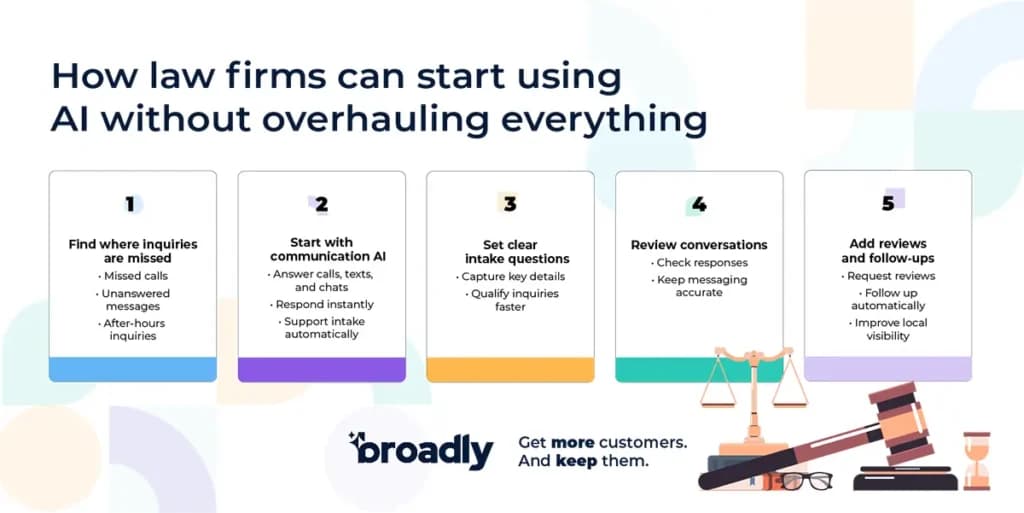
1. Identify where calls or messages are missed
Review phone logs, voicemail reports, and website inquiries. Missed calls, delayed replies, and unanswered after-hours messages are often the biggest contributors to lost opportunities and weak law firm lead capture.
2. Start with communication-focused AI
Begin with AI that answers calls, texts, and chats. This immediately improves responsiveness and supports client intake automation without adding pressure on your staff.
3. Set clear intake questions
Decide what information matters most at the first point of contact. Consistent intake questions help qualify inquiries and make follow-ups faster and more effective.
4. Review conversations regularly
AI should not run on autopilot forever. Reviewing conversations helps ensure responses stay accurate, on-brand, and aligned with how your firm works.
5. Expand into reviews and follow-ups
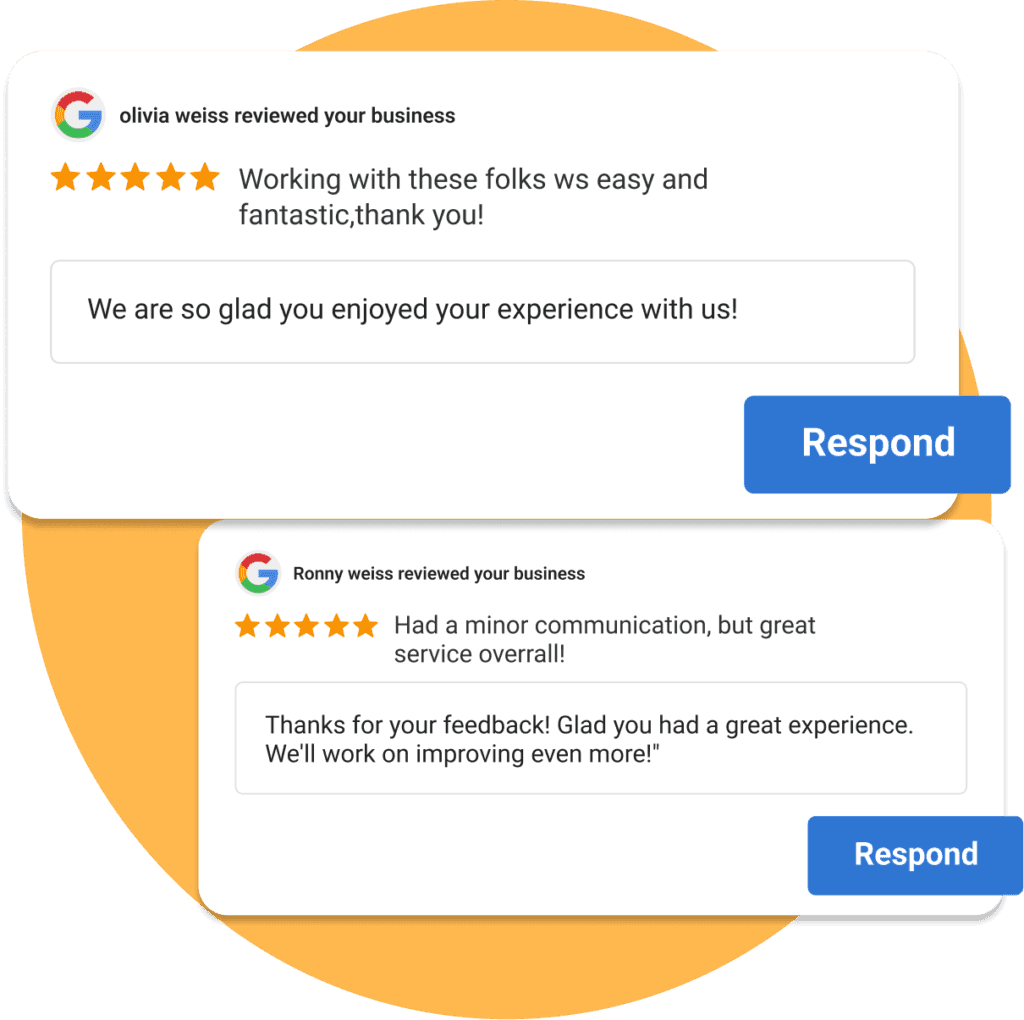
Once intake is running smoothly, use AI to request reviews and send follow-up messages. These actions strengthen visibility and engagement, which directly support local lead generation.
Taking these steps helps firms move from reactive communication to a more reliable, streamlined system without adding complexity or headcount.
Turning Missed Inquiries Into Managed Conversations
AI for law firms works best when it fixes the everyday breakdowns that cost firms' clients.
Missed calls, slow replies, manual intake, and inconsistent follow-ups all create friction at the front of the firm. AI helps remove that friction by making sure every inquiry is answered, every conversation is captured, and every next step is clear.
The firms seeing real results are not using AI to replace legal expertise. They are using it to manage communication better. Intake becomes consistent. Scheduling stays organized. Follow-ups happen on time. Clients feel acknowledged from the first interaction.
When communication is handled well, trust builds faster. When trust builds faster, decisions follow.
That is where AI delivers value for law firms. It turns missed inquiries into managed conversations while keeping the focus on the legal work that matters most.
If you want to see how this works in practice, schedule a demo with Broadly and see how AI can handle calls, messages, intake, and follow-ups for your firm, automatically and in one place.
AI for Law Firms FAQs
1. What is AI for law firms?
AI for law firms helps manage client communication, intake, scheduling, and follow-ups automatically. Instead of changing legal work, it improves how firms respond to and organize client inquiries.
2. How does AI help law firms get more clients?
AI responds instantly to calls, texts, and website messages, even after hours. Tools like Broadly ensure no inquiry is missed, helping firms respond faster than competitors.
3. Is AI allowed for use in law firms?
Yes, AI is allowed when used for administrative and communication tasks. Lawyers remain fully responsible for legal advice and case outcomes, while AI supports front-office operations.
4. Can AI answer phone calls for law firms?
AI can answer calls, collect caller details, and schedule consultations automatically. Broadly’s AI employees act like a virtual front desk, keeping firms available 24/7.
5. Does AI replace legal assistants or receptionists?
AI does not replace staff. It handles repetitive communication so legal assistants and receptionists can focus on client service and case-related work.
6. Is AI secure for handling client inquiries?
Reputable AI platforms follow strict data privacy and security standards. Broadly is built for service-based businesses and securely manages client communication and intake.
7. What types of law firms benefit most from AI?
Solo attorneys, small firms, and growing practices benefit the most. Areas like personal injury, family law, and criminal defense see strong results where speed matters.
8. Can AI schedule consultations automatically?
Yes, AI can book consultations based on availability and send reminders. This reduces manual scheduling and lowers no-show rates for law firms.
9. Does AI work after hours and on weekends?
AI works 24/7, responding to inquiries when offices are closed. This helps law firms capture leads that would otherwise go to faster-responding competitors.
10. How quickly can a law firm start using AI?
Most firms can start in just a few days. With Broadly, setup focuses on intake questions, scheduling rules, and communication preferences; no complex training required.


